The problem
Media companies are sitting on decades of content on tape, on aging on-prem storage, or in legacy systems being sunset. The content has real value, but it is effectively dark.
- Nobody can find anything without watching it. Search is filename and folder only.
- Migrating petabytes off tape or an end-of-life platform is expensive and feels like pure cost with no payoff.
- Even after a migration, most archives are still just a big bucket. You can store it, but you cannot use it.
- The recurring question from every stakeholder: it is great that you can tell me what is in the video, but then what?
Who it is for
- Public broadcasters and station groups with multi-petabyte libraries.
- Independent and mid-size studios with deep catalogs that hold significant content value.
- Archival and migration specialists moving customers off tape and on-prem into the cloud.
How Ceivo solves it
Ceivo deploys into the customer's own AWS account and sits directly on their S3 buckets. There is no separate hosting bill and no markup on their cloud.
On ingest, Ceivo runs proprietary scene detection that condenses each file into a set of representative frames, then sends those frames through your chosen AI models for description, tagging, and embedding. This makes indexing a full show cost cents rather than dollars, so indexing an entire archive is economically realistic.
Every piece of understanding is written back into the library and persists. The archive does not just become searchable; it gets progressively richer every time it is analyzed.
Understanding is relational, not just per-file. Ceivo builds a graph between files and scenes, so the library knows how material connects instead of treating every asset as an island. On top of that graph it classifies content automatically, and where you already have a library structure it can follow it, filing incoming archive material into the right place without anyone sorting it by hand. Those same connections let an editor start from one clip and instantly surface similar shows and similar shots across the entire archive, which is how teams find the material they did not know they had.
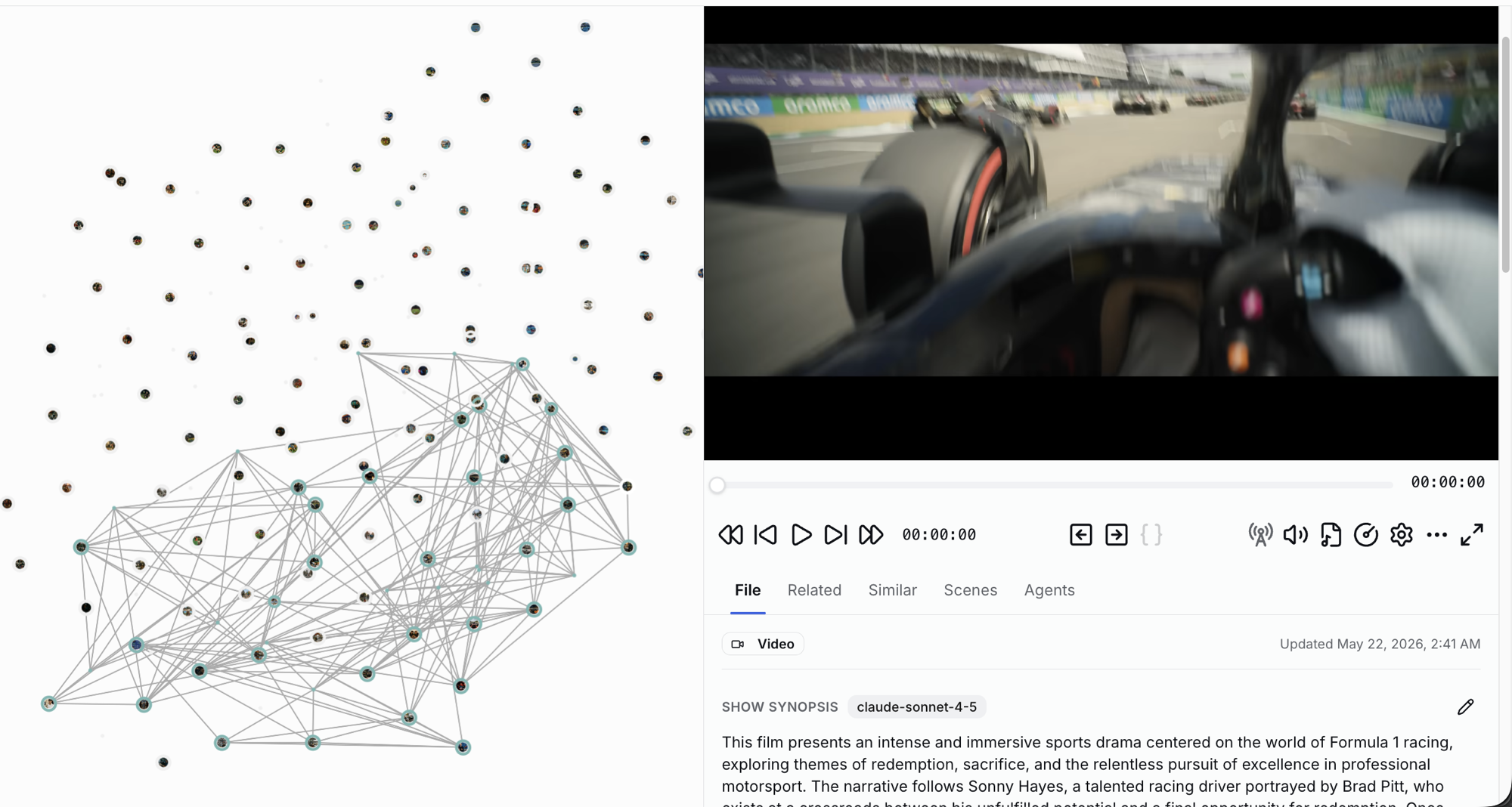
Search by word, by description, or by picture
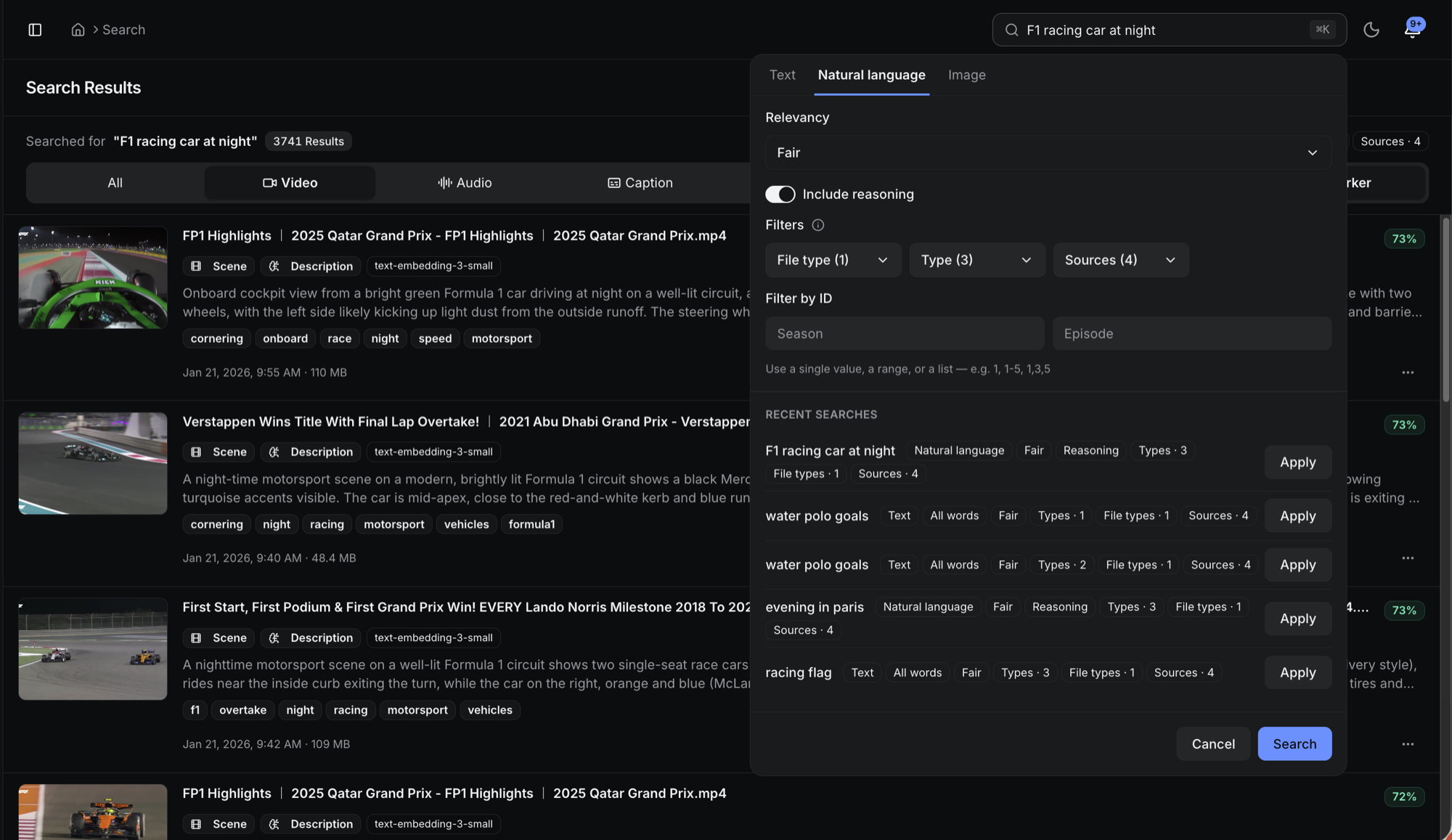
Understanding this deep changes what search means. Find a shot by keyword when you know the words, by natural language when you can only describe it, like "an F1 car cornering at night on a lit circuit," or by image: hand Ceivo a still of a location, an actor, or a product and it returns every matching shot across the whole archive. For a library measured in petabytes, that is the difference between a catalogue you can browse and one you can actually mine. The footage you forgot you had becomes findable the moment you can point at something like it.
Once content is understood, Ceivo makes it actionable: semantic and visual search, AI search agents that monitor for specific content, clip and playlist creation, and agents that can summarize, repackage, and route assets for reuse and monetization.
In practice
A national broadcaster with a five petabyte library wants more than storage. Ceivo ingests the archive in the customer's AWS account, indexes it through scene detection plus the customer's chosen models, and builds a persistent understanding layer. Staff can now search by what is on screen or said, not just by filename. From there, agents summarize and surface content for reuse, which turns a storage cost center into a discoverable, reusable catalog.
A specific knowledge example: a studio holds a music cue sheet PDF for every show, listing composers and tracks. Ceivo reads those PDFs into time-coded understanding, so the question shifts from "what song is this" to "what existing music is this similar to, and which composer should we use next." The archive starts answering questions no other system can.
Turn the archive into revenue
Activating the archive is not only about search. Once Ceivo understands every asset, that understanding becomes the raw material for strategy, and the same AI that indexed the library can help you make money from it. Expose the library to an agent and it stops being a cost center and starts working like a revenue generation assistant.
It positions, names, and pitches it
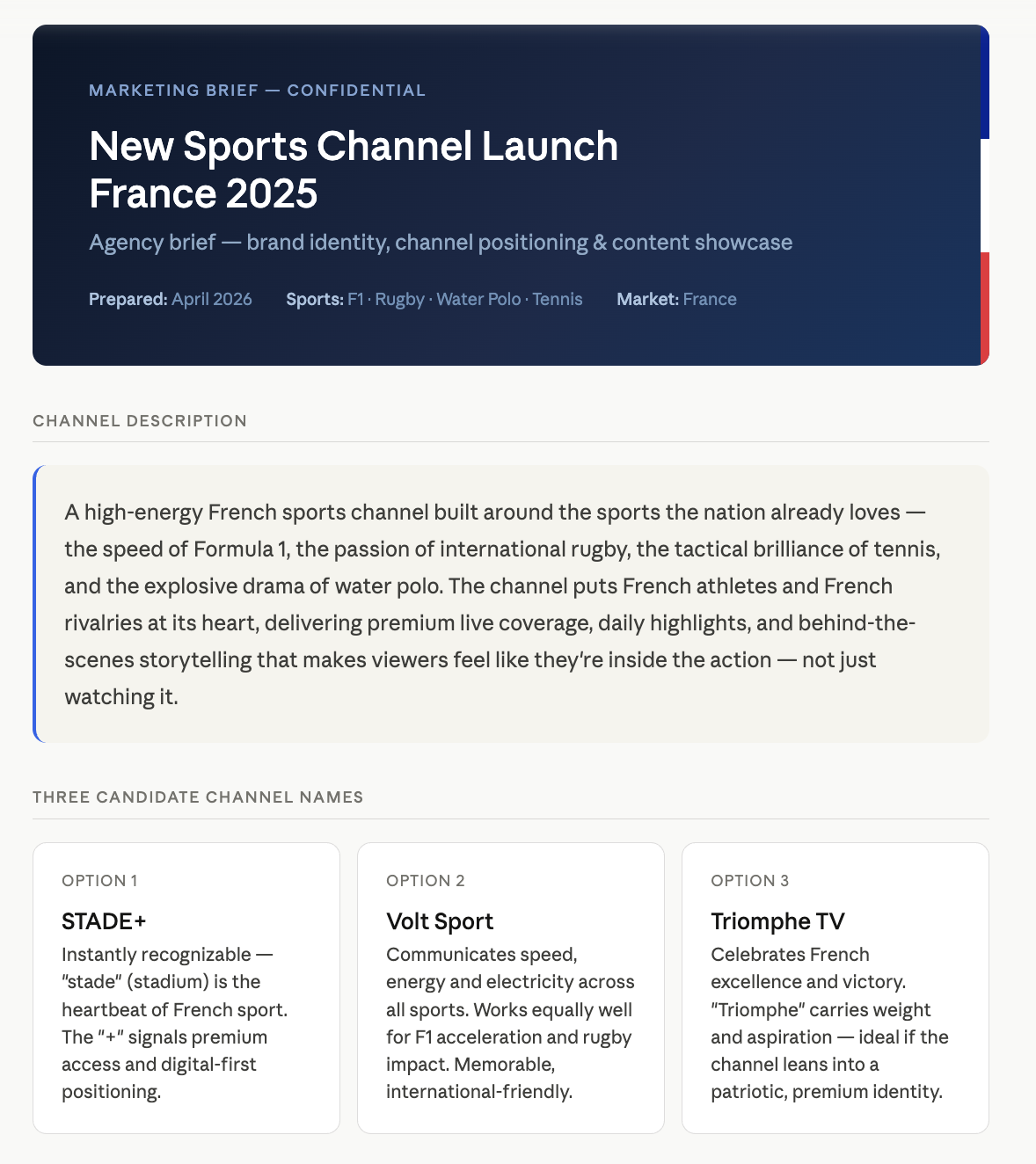
A great channel is more than a schedule. Ceivo carries the idea into the language a go-to-market team needs: a channel description, positioning for the audience you are chasing, candidate names, and a content showcase that proves the concept. Because it works from the actual footage, the pitch is specific to what you can deliver, not a generic template.
"I'm launching a new sports channel in France. Help me come up with a marketing brief to give the agency we're working with, some examples of content that will be engaging and fun, a short description of the channel, and three potential channel names."
It programs a new channel from what you already own
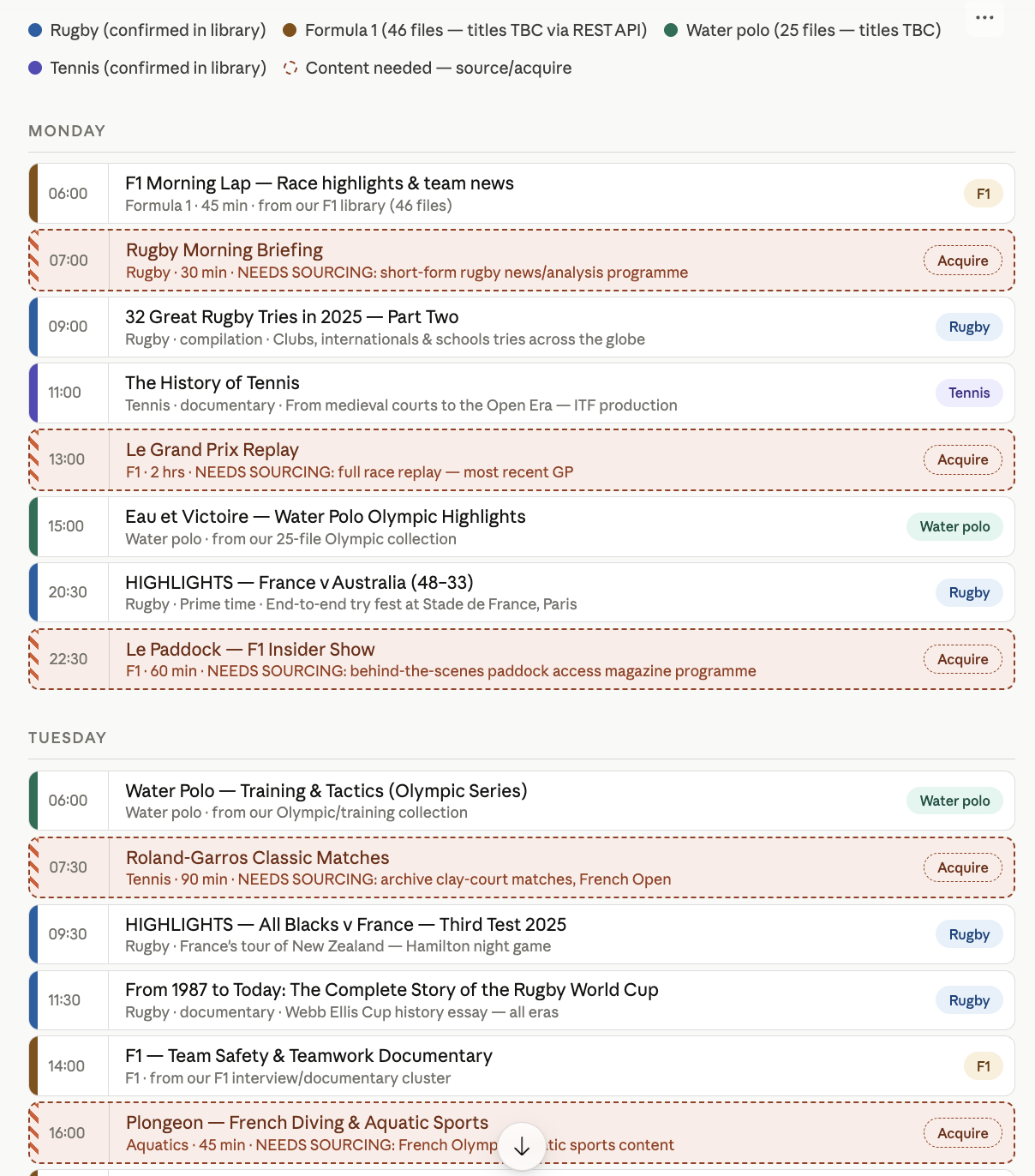
Ask Ceivo what your archive could become and it scans the whole library, counts what you actually hold, and proposes a channel built from it. For a FAST or streaming launch it can lay out a full weekly schedule slot by slot, drawing on the content you own, grouping it by sport, genre, and theme, and flagging the gaps where you would need to source or acquire more. Weeks of manual audit and scheduling become a proposal you can review in an afternoon, grounded in the real contents of your library rather than a guess.
"Come up with a TV guide schedule for one week of programming and name the specific shows. It's fine to repeat content outside the core hours. We don't have enough shows yet, but assume we'll get more: where content is missing, if I don't have the license for France, list the sport and the title and mark it with a colour or annotation so we know to source it."
It builds the sponsorship and ad-sales strategy
The same understanding drives the commercial side. Ceivo can produce a full sponsorship and ad-sales plan: how many sponsor targets the content supports, which commercial categories fit, from title and presenting sponsorship to in-break advertising, branded integrations, and digital extensions, priority tiers, and a first-year revenue target. It ranks every prospect by fit, weighing confirmed visibility in your footage, category alignment, and market presence. The archive stops being an asset you store and becomes a media property you can sell.
"Can you write me a brief that summarizes our scheduling."

It finds advertisers already in your footage
This is the part that turns understanding into a warm sales call. Because Ceivo recognizes brands, logos, and products inside the video itself, it surfaces the advertisers whose branding is already visible in your content, on jerseys, on perimeter boards, on naming-rights signage, and ties each one to the exact programme and timecode where it appears. Every one of those is a sponsor conversation that opens with evidence: your logo is already in our content, and here is where. The archive does not just find you buyers, it hands you the pitch.
"Can you build me a list of potential sponsors and a brief my ad sales team can use to target them? Also build a table of the top 30 sponsors to target in the French market, ranked by existing sponsorships (for example, Red Bull on the F1 car in our shots), grouped into target bands, with a reason to target each brand."
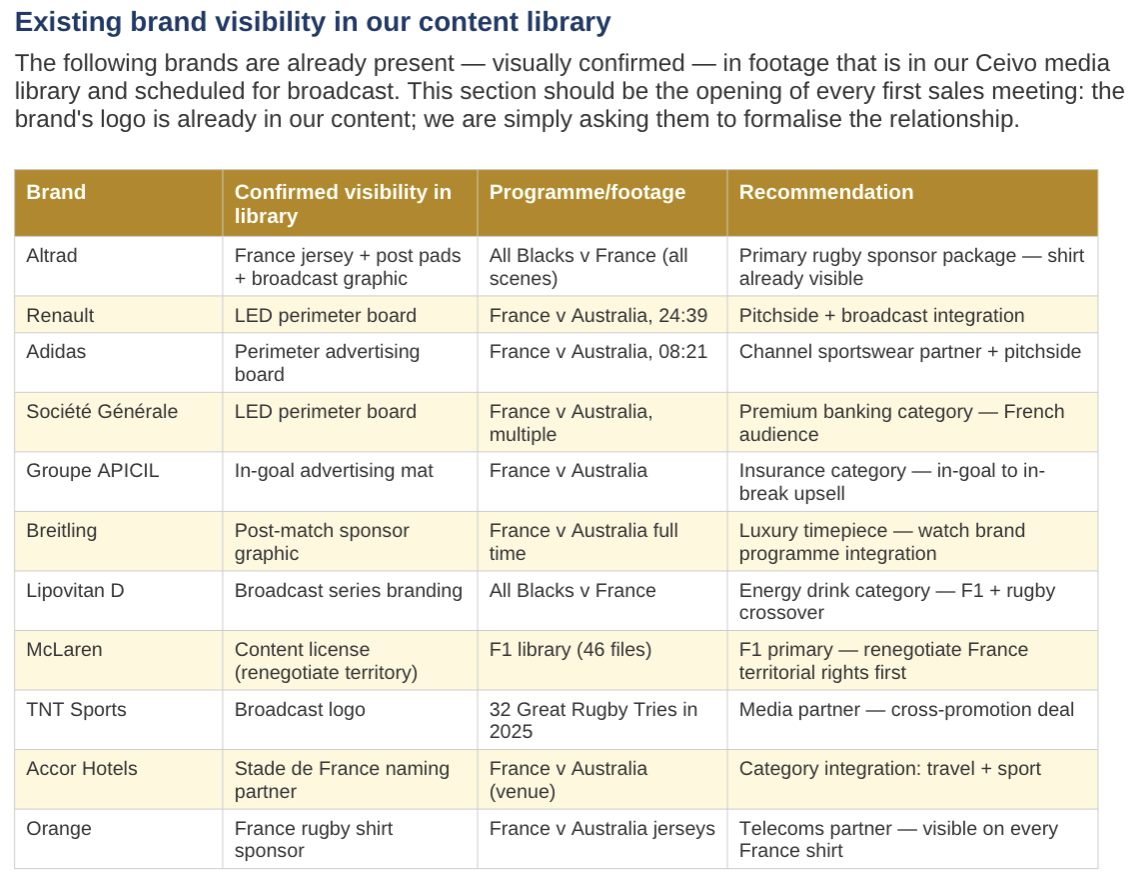
Put together, this is what activating the archive really means. The library you were paying to store becomes a source of new channels, a pipeline of sponsor leads, and a revenue line, with the AI doing the scanning, the strategy, and the first draft of the pitch.
Why Ceivo
- Built AI-native, so it makes the archive usable, not just stored.
- Runs in your cloud on your buckets, with partner programs available to reduce the upfront cost of getting started.
- Every analysis compounds, so the archive keeps getting more valuable over time.
- The same AI that indexes the archive helps monetize it, proposing channels, ranking sponsors, and drafting the revenue strategy.
Related
- Beyond the API: designing media infrastructure for the agent era
- The Library Graph and scene-level understanding
- Governed AI Access, index once and reuse everywhere